Help operators avoid sellouts, simplify prep, and serve consistent beverages all day long.
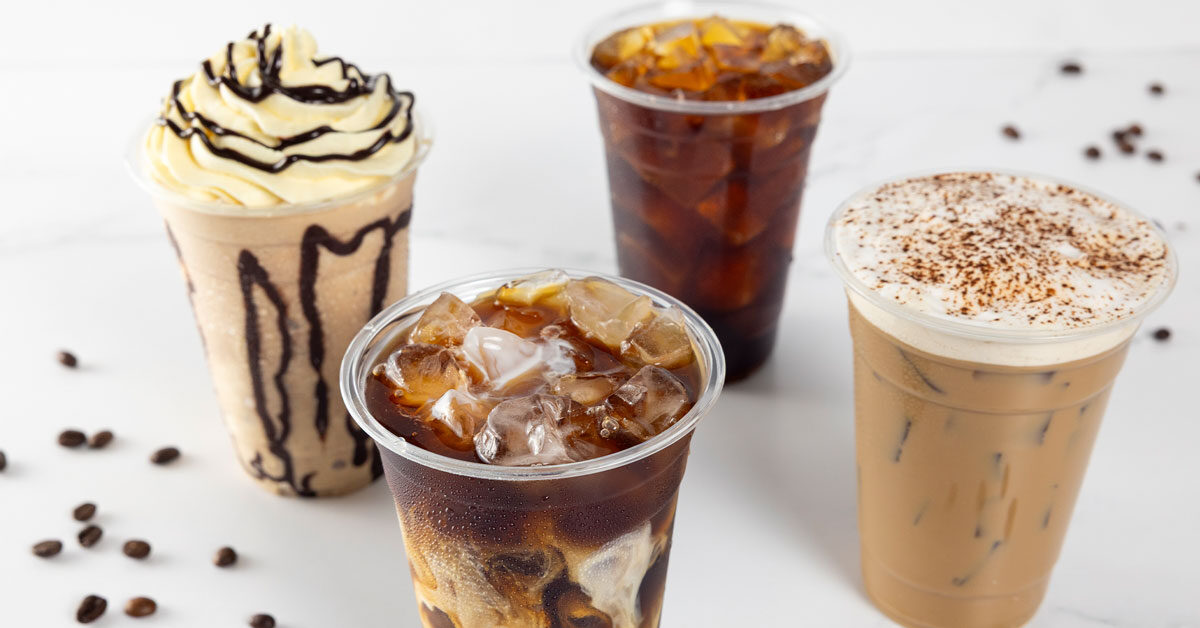
Cold beverages continue to gain traction in the quick-service restaurant space, particularly with younger consumers who are gravitating toward indulgent, cold drinks. Datassential reports that 30 percent of consumers drink cold coffee as a way to treat or reward themselves, and the “little treat culture” is increasingly driving repeat visits.
For operators, however, keeping up with demand can create back-of-house challenges. Traditional cold brew programs using the toddy method require long brew times, dedicated equipment, staff training, and valuable storage space, all of which can complicate operations. That’s where ready-to-mix solutions like Vibrant Beverage’s cold brew concentrates can offer a more efficient path forward.
Vibrant Beverage offers both bottled concentrates and bag-in-box (BIB) solutions, allowing operators to choose the format that best fits their operation. Bottle concentrates can be implemented immediately without additional equipment and minimal training, while still supporting easy batch prep and consistent execution. BIB solutions, meanwhile, pair with dispensing equipment to provide convenient product-on-demand service for high-volume operations.
“Our cold brew concentrates deliver superior sensory with consistency at scale while reducing labor and back-of-house operations,” says Brittney Strickland, director of marketing foodservice for Vibrant Beverage. “Instead of relying on the traditional toddy method, operators can provide a consistent, premium beverage experience every time.”
The toddy method is a traditional way of making cold brew by steeping coffee grounds in water for an extended period, often 18–24 hours. While it can produce quality products, the process requires advance planning, storage space, and labor. “The toddy method creates bottlenecks,” Strickland says. “Operators need a large brewing container, filters, ground coffee, and purified water.”
With Vibrant Beverage’s bottled concentrate cold brew solution, this whole process is eliminated. “Operators simply pour a bottle of concentrate, mix it with a set amount of water, and then they have a full gallon of cold brew ready to use,” Strickland says. “The mixture can then be served as traditional cold brew, used in cold brew lattes, or even added to a nitro system. There’s no brewing and no 18–24-hour wait time; it’s ready when operators need it.”
Traditional brewing methods can lead to inconsistencies because one crew member could make it stronger or use a different amount of grounds than another. It also creates labor problems since someone has to step away from front-of-house responsibilities to prepare the cold brew in the back of house. “Another major issue is running out mid shift,” Strickland says. Vibrant Beverage’s solution enables cold brew on demand with batch prep in minutes making it easy to scale as demand increases.
After implementing Vibrant Beverage cold brew, operators often highlight increased beverage sales. “The solution helps them serve more guests without losing out on sales, because there’s no downtime and they can quickly replenish products if they run out,” Strickland says. “Another advantage is that operators can use it to create trending iced lattes and specialty beverages, and sell these options at a higher price, which boosts average check size.”
Quick-service restaurant operators should view cold brew as a growing opportunity. “Cold brew should be viewed as a platform for innovation,” Strickland says. “It can support functional beverage builds, indulgent treat-style formats, and LTOs, giving operators more flexibility in how they use it on their menus.”
Originally published by QSR Magazine